Douglas-fir is not related to the true firs.
This wide ranging species grows from 70 to 250 feet tall. The branches are spreading to drooping, the buds sharply pointed and the bark is very thick, fluted, ridged, rough and dark brown.
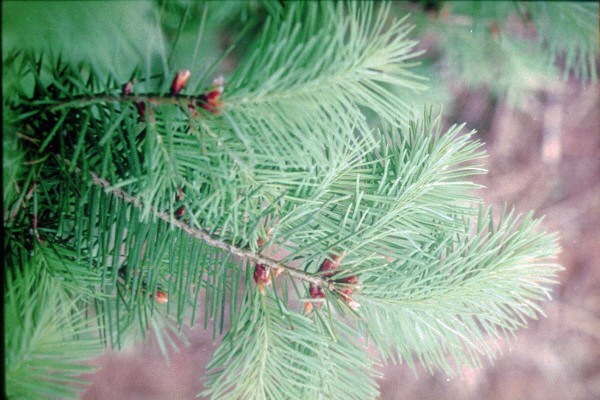
The needles are dark green or blue green, 1 to 1 1/2 inches long, soft to the touch and radiate out in all directions from the branch. They have a sweet fragrance when crushed.
Pollen strobili are small and reddish-brown. Young cones are small, oval shaped and hang downward. They are reddish-brown to gray, 3" long and do not dissipate to spread seed as do true firs (Abies sp.). The cones open in the late summer to disperse the seeds and will continue to hang on the trees through the fall.
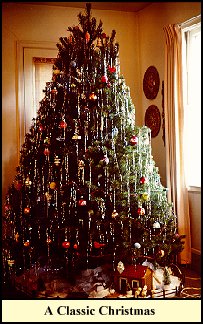
The Douglas-fir has been the major Christmas tree species used in the Pacific Northwest since the 1920's. During the following 40 years, nearly all trees were harvested from forest lands. Since the 1950's, the transformation from growing trees in the wild to culturing them on plantations has been dramatic. Today, few trees come from forest lands.
An interior strain from the Rocky Mountains (P. menziesii var. glauca) has been extensively planted throughout several midwestern state Christmas tree plantations. It is preferred because of its ability to withstand the more harsh growing conditions than the Pacific Northwest seed sources.
Nationally, it remains one of the most popular Christmas trees species.





 SEARCH


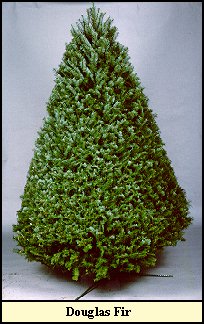 This wide ranging species grows from 70 to 250 feet tall. The branches are spreading to drooping, the buds sharply pointed and the bark is very thick, fluted, ridged, rough and dark brown.
The needles are dark green or blue green, 1 to 1 1/2 inches long, soft to the touch and radiate out in all directions from the branch. They have a sweet fragrance when crushed.
Pollen strobili are small and reddish-brown. Young cones are small, oval shaped and hang downward. They are reddish-brown to gray, 3" long and do not dissipate to spread seed as do true firs (Abies sp.). The cones open in the late summer to disperse the seeds and will continue to hang on the trees through the fall.
This wide ranging species grows from 70 to 250 feet tall. The branches are spreading to drooping, the buds sharply pointed and the bark is very thick, fluted, ridged, rough and dark brown.
The needles are dark green or blue green, 1 to 1 1/2 inches long, soft to the touch and radiate out in all directions from the branch. They have a sweet fragrance when crushed.
Pollen strobili are small and reddish-brown. Young cones are small, oval shaped and hang downward. They are reddish-brown to gray, 3" long and do not dissipate to spread seed as do true firs (Abies sp.). The cones open in the late summer to disperse the seeds and will continue to hang on the trees through the fall. 


